How to Determine the True Market Value of Your House
How to Determine the True Market Value of Your House in 2026
Reading time: 9 minutes
Table of Contents
- Why Your Home’s Real Value Isn’t What You Think
- Five Proven Methods to Value Your Home
- Mastering Comparable Sales Analysis
- Technology vs. Human Judgment
- Common Valuation Pitfalls
- Real-World Case Studies
- Frequently Asked Questions
- Your Roadmap Forward
Why Your Home’s Real Value Isn’t What You Think
Here’s an uncomfortable truth: most homeowners have no idea what their house is actually worth. They know what they paid, what the neighbor’s house sold for three years ago, or what a random app told them last Tuesday. But true market value—the price a qualified buyer would actually pay today—is a moving target shaped by dozens of factors that shift weekly.
In 2026, this gap between perception and reality has widened. With mortgage rates hovering around 6.3-6.7% and inventory levels still recovering from years of underbuilding, local markets are behaving unpredictably. Some suburbs are seeing 8% year-over-year appreciation while similar towns twenty miles away are flat or declining slightly. Generic national headlines about “the housing market” tell you almost nothing useful about your specific property.
Well, here’s the straight talk: accurate valuation isn’t about finding one magic number—it’s about triangulating multiple data sources until a realistic range emerges.
Five Proven Methods to Value Your Home
Let’s break down the practical approaches, ranked roughly by accuracy and effort required.
1. Comparative Market Analysis (CMA)
This is the gold standard used by real estate agents. A CMA examines recently sold properties (typically within the last 3-6 months) that closely match yours in size, condition, location, and features. According to the National Association of Realtors’ 2025 Profile of Home Buyers and Sellers, homes priced using a professional CMA sold within 2% of asking price on average, compared to 7-9% variance for homes priced using automated estimates alone.
2. Automated Valuation Models (AVMs)
Tools like Zillow’s Zestimate, Redfin Estimate, and Realtor.com’s valuation tool use algorithms trained on public records, tax assessments, and sales data. They’re fast and free, but they struggle with unique properties, recent renovations, or thin data markets. Zillow itself acknowledges a median error rate of around 2.4% for on-market homes but admits this jumps significantly—sometimes above 7%—for off-market properties.
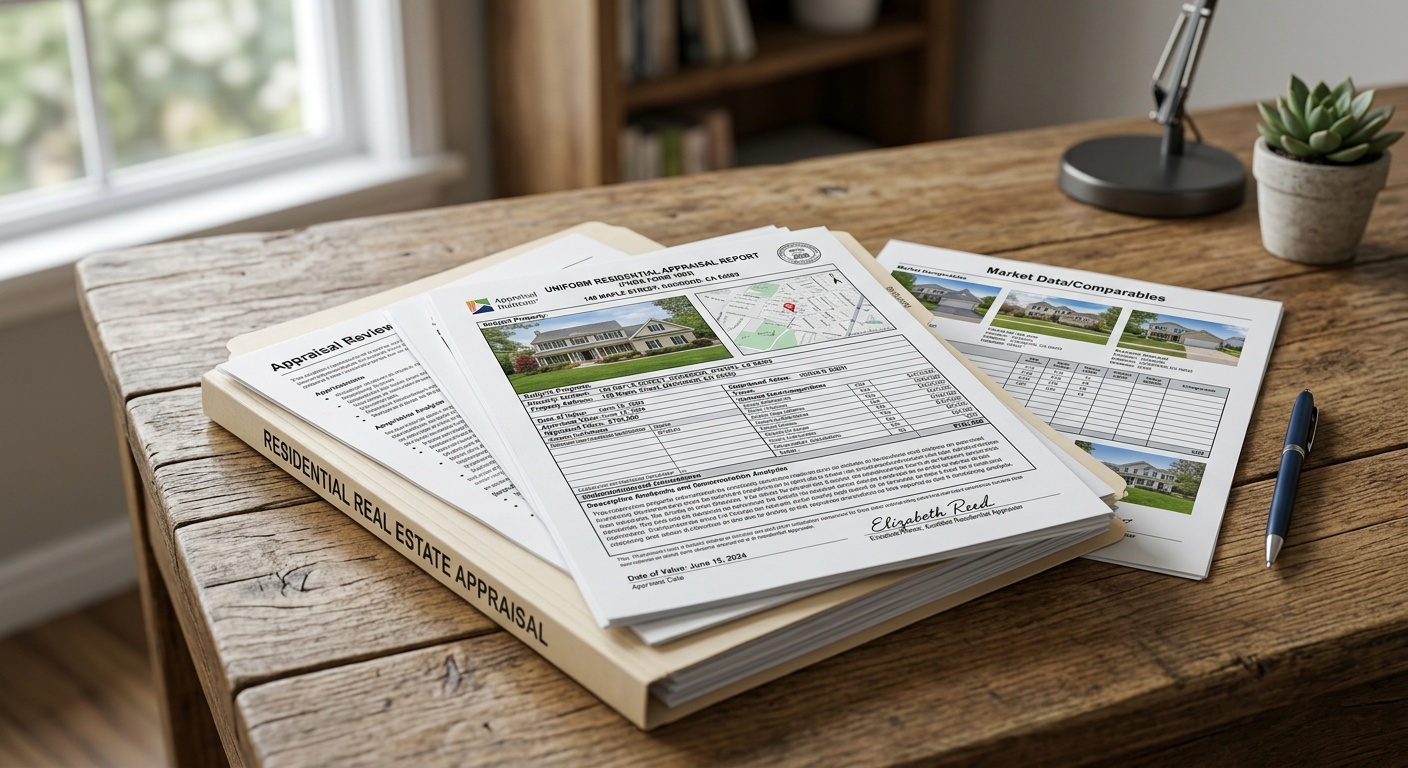
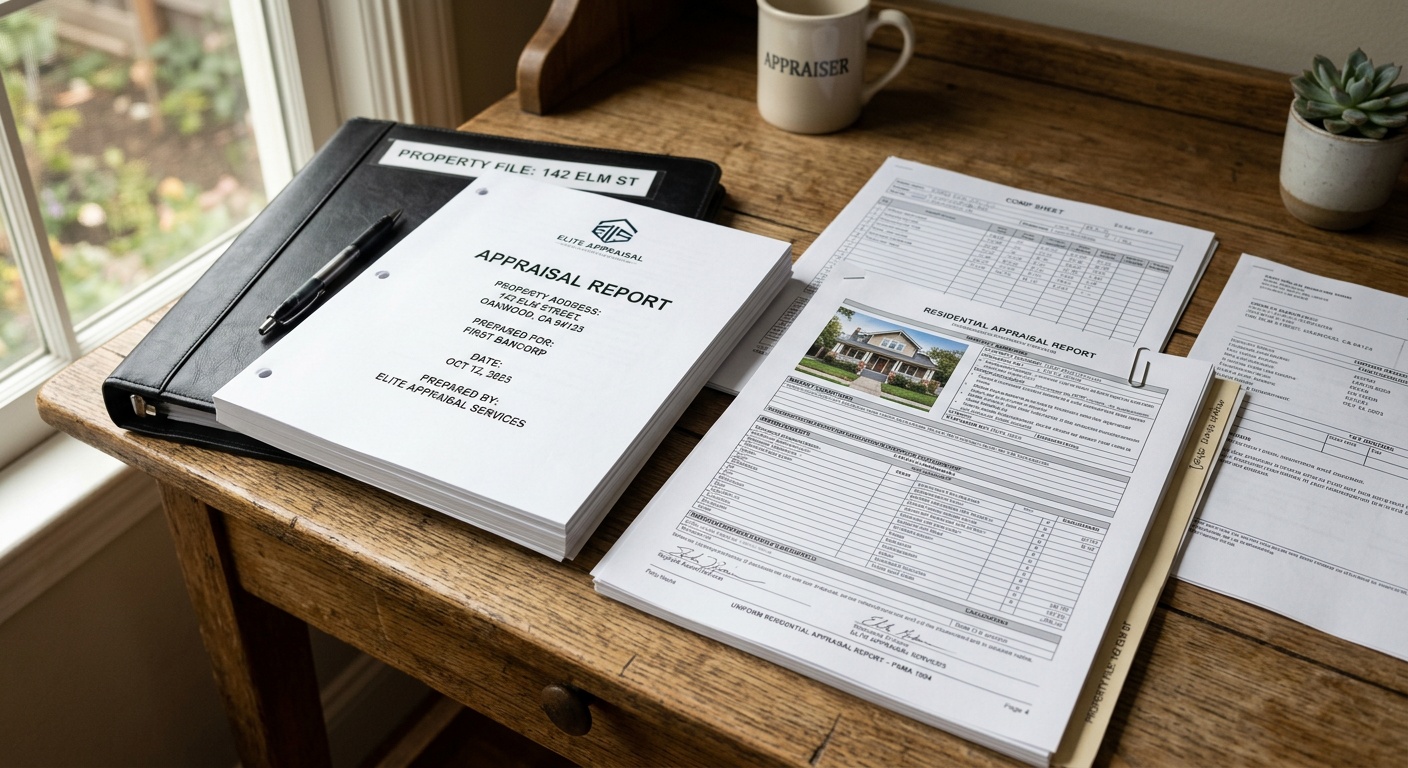
3. Professional Appraisal
A licensed appraiser conducts an in-person inspection, applies standardized methodology, and produces a legally defensible valuation. This is required for most mortgage transactions and costs between $400-$700 in 2026, depending on your region and property complexity.
When You Actually Need One
You don’t always need a full appraisal. Skip it for casual curiosity; get one before refinancing, contesting property taxes, settling an estate, or negotiating a divorce settlement.
4. Cost Approach (Replacement Value)
This method calculates what it would cost to rebuild your home from scratch, then adjusts for land value and depreciation. It’s most useful for new construction, unique properties, or homes in areas with few comparable sales—think rural properties or architecturally unusual builds.
5. Income Approach
Primarily used for rental properties, this method values a home based on the income it could generate. If you’re evaluating a property partly as an investment, calculating the capitalization rate against comparable rental yields gives you a completely different—and sometimes more revealing—perspective on value.
Mastering Comparable Sales Analysis
Quick Scenario: Imagine you own a three-bedroom colonial built in 1998, sitting on a quarter-acre lot in a mid-sized suburb. How do you find genuinely comparable properties instead of ones that just look similar on the surface?
The answer lies in disciplined filtering:
- Distance matters less than you think. A comp two miles away in the same school district often beats one three houses down but zoned differently.
- Sale date recency is non-negotiable. In a market moving 6-8% annually, a comp from 14 months ago is essentially useless without heavy adjustment.
- Adjust for condition honestly. That “updated kitchen” comp might have granite counters from 2012, not the same tier as your 2025 renovation.
- Square footage per dollar reveals hidden truths. Two homes priced identically can have wildly different price-per-square-foot values once you account for finished basements or bonus rooms.
Real estate appraiser Linda Chen, who has valued properties across the Midwest for over fifteen years, puts it bluntly: “Sellers who cherry-pick the three highest comps in their neighborhood and ignore the twelve others aren’t doing market analysis—they’re doing wishful thinking.”
Technology vs. Human Judgment
Here’s a comparison of how different valuation methods stack up across key metrics homeowners actually care about:
| Method | Average Cost | Accuracy Range | Turnaround Time | Best Use Case |
|---|---|---|---|---|
| AVM (Zillow, Redfin) | Free | ±2.4% to 7% | Instant | Quick curiosity check |
| Agent CMA | Free-$200 | ±2% | 1-3 days | Selling or listing prep |
| Professional Appraisal | $400-$700 | ±1-3% | 5-10 days | Financing, legal matters |
| Cost Approach | $500-$900 | ±5-10% | 1-2 weeks | Unique/new construction |
| Income Approach | $300-$600 | ±4-8% | 3-7 days | Rental/investment properties |
Visualizing Accuracy Levels
Below is a simple breakdown comparing typical accuracy (lower error percentage = more reliable) across the five methods:
Common Valuation Pitfalls
Even careful homeowners stumble into predictable traps. Here are three worth flagging:
Anchoring on Purchase Price or Renovation Costs
Just because you spent $60,000 on a kitchen remodel doesn’t mean the market will pay you back dollar-for-dollar. Buyers value finished results, not your invoice history. Kitchen remodels typically recoup 55-70% of cost at resale, according to Remodeling Magazine’s 2025 Cost vs. Value report.
Ignoring Micro-Market Shifts
City-wide averages mask neighborhood-level volatility. A new highway interchange, school rezoning, or a single large employer relocating can swing values 5-10% in a specific zip code while the broader metro stays flat.
Overweighting Emotional Value
The house where you raised your kids feels priceless to you. It’s just another data point to a buyer. Separating sentiment from strategy is one of the hardest—and most important—disciplines in accurate self-valuation.
Real-World Case Studies
Case 1: The Overpriced Renovation. A homeowner in a mid-Atlantic suburb spent $85,000 on a luxury bathroom addition in 2024, expecting it to boost resale value dollar-for-dollar. When listed in early 2026, comparable sales analysis showed neighboring homes without the addition selling within 4% of the renovated property’s price. The lesson: over-improving beyond neighborhood norms rarely pays back fully.
Case 2: The AVM Trap. A seller in a fast-growing Sun Belt city relied solely on an online estimate that pegged their home at $412,000. A professional CMA, incorporating three recent comps within a half-mile, revealed a more accurate value of $389,000—the AVM hadn’t accounted for a busy road adjacent to the property. Listing at the inflated price led to 47 days on market with no offers; repricing at the CMA figure generated a contract within 9 days.
Case 3: The Rental Conversion. An investor considering converting a single-family home into a rental used the income approach alongside a traditional CMA. The CMA suggested a sale value of $340,000, but the income approach revealed the property could generate a 6.8% capitalization rate as a rental—higher than comparable investment properties in the area, prompting the owner to hold rather than sell.
Frequently Asked Questions
How often should I check my home’s market value?
Once or twice a year is sufficient for general awareness, unless you’re actively planning to sell, refinance, or contest a tax assessment. Markets don’t typically shift dramatically month-to-month outside of unusual economic events.
Are online home value estimators reliable in 2026?
They’re useful starting points but shouldn’t be your only source. Treat AVM figures as a rough range rather than a precise number, especially for unique properties, rural homes, or areas with limited recent sales data.
Can I dispute a low appraisal?
Yes. You can request a reconsideration of value by providing additional comparable sales the appraiser may have missed, documenting recent upgrades, or pointing out factual errors in the report. Lenders are generally required to consider legitimate, well-documented appeals.
Your Roadmap Forward
Determining true market value isn’t a one-time task—it’s an ongoing practice of cross-referencing data, staying honest about your property’s condition, and resisting the pull of emotional attachment or algorithmic shortcuts. As 2026’s housing market continues to fragment into hyper-local micro-markets, the homeowners who win are the ones who combine multiple valuation methods rather than trusting a single source.
- Step 1: Pull at least three comparable sales from the past 90 days within a one-mile radius.
- Step 2: Cross-check an AVM estimate against a free agent CMA for a reality check.
- Step 3: If you’re financing, selling, or facing a legal matter, invest in a professional appraisal.
- Step 4: Reassess annually, and immediately after any major local development news.
- Step 5: Separate emotional value from market value—write down both numbers and notice the gap.
So, what’s your next move—are you ready to look past the Zestimate and dig into the real numbers behind your home’s worth?