How Selling Your Home for Cash Can Fund an Overseas Property Purchase
How Selling Your Home for Cash Can Fund an Overseas Property Purchase
Reading time: 8 minutes
Table of Contents
- Why Cash Home Sales Are Booming in 2026
- The Mechanics of Turning Equity Into International Real Estate
- Cash Sale vs. Traditional Sale: A Side-by-Side Look
- Real Stories: Three Homeowners Who Made the Leap
- Common Challenges and How to Solve Them
- Your Roadmap Forward
- FAQs
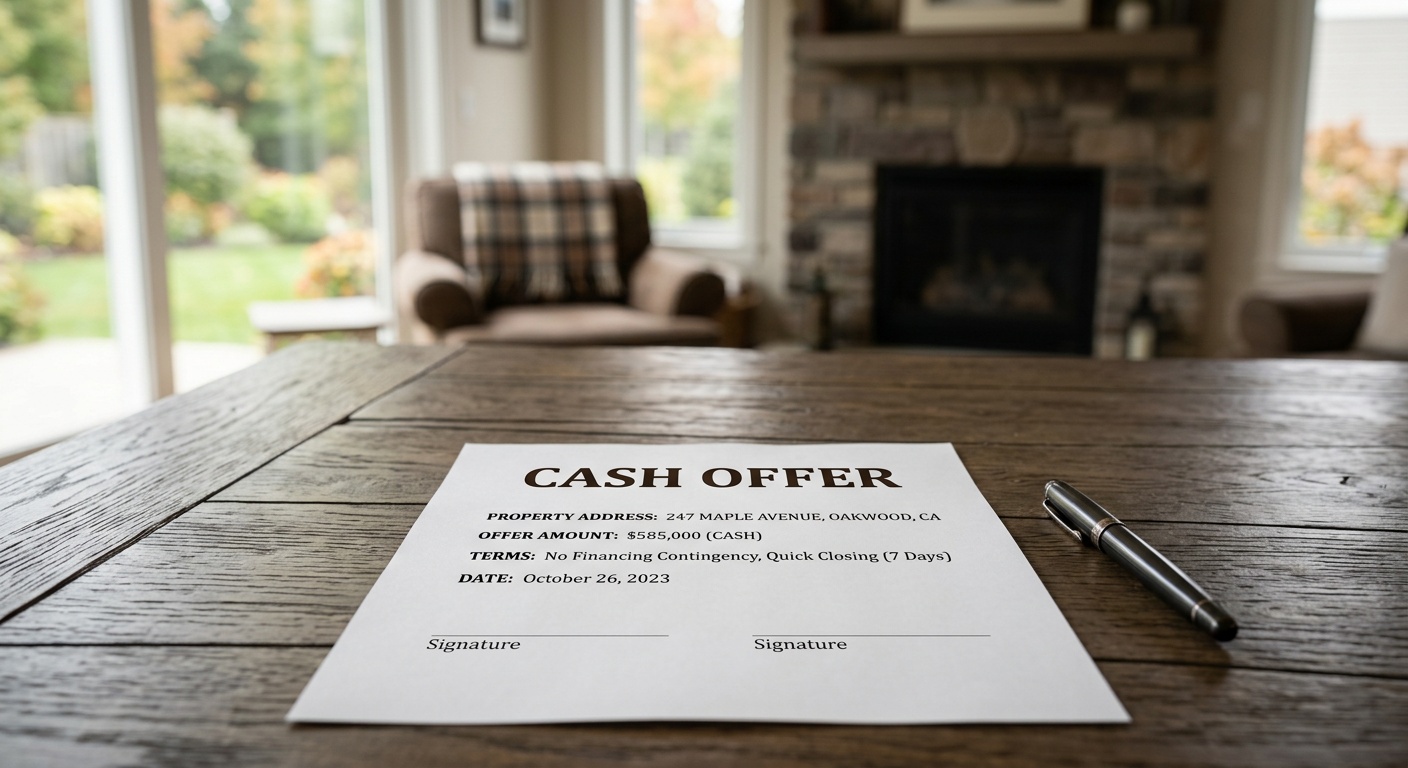
Selling a house fast for cash used to feel like a last resort—something you did if you were desperate or facing foreclosure. That reputation is outdated. In 2026, a growing number of homeowners are choosing cash sales strategically, using the proceeds to buy villas in Portugal, apartments in Athens, or countryside homes in Italy. It’s not a plan B anymore; it’s a deliberate financial move.
Here’s the straight talk: liquidity is power when you’re buying property abroad. Overseas sellers rarely wait around for mortgage approvals from foreign banks, and currency fluctuations can eat into your budget while you dawdle. A cash sale compresses your domestic transaction into weeks instead of months, giving you the flexibility to move fast when the right overseas opportunity appears.
Why Cash Home Sales Are Booming in 2026
According to the National Association of Realtors’ early 2026 data, all-cash purchases of U.S. homes by investor buyers—many of whom then resell quickly to homeowners seeking speed—now account for roughly 28% of residential transactions, up from 24% in 2024. This surge reflects a broader shift: sellers want certainty, not just top-dollar offers that fall through during financing contingencies.
Quick Scenario: Imagine you own a paid-off suburban home worth $420,000. Listing traditionally might net you $435,000 after a bidding war, but it could take 60-90 days to close, plus another 30 days for buyer financing. A cash buyer offers $395,000 but closes in 10 days. If your dream apartment in Lisbon requires a deposit within three weeks to lock in a favorable exchange rate, that speed premium might be worth far more than the $40,000 difference.
The Currency Timing Factor
Currency volatility is an underappreciated risk in cross-border property deals. Between January and October 2025, the EUR/USD rate swung by more than 9%, meaning a €500,000 property could have cost a U.S. buyer anywhere from $535,000 to $585,000 depending on when funds were converted. Homeowners who sell for cash and move quickly can lock in conversions before adverse swings erode their purchasing power.
The Mechanics of Turning Equity Into International Real Estate
The process isn’t complicated, but it does require sequencing. First, you get a cash offer—often from an iBuyer platform, a real estate investment firm, or a “we buy houses” company. These offers typically arrive within 24-48 hours of a property walkthrough or even a virtual assessment. Second, you negotiate terms, including a flexible closing date that aligns with your overseas purchase timeline. Third, once funds land in your account, you wire the deposit or full payment to your international transaction, usually through an escrow service or notary, depending on the country’s legal framework.
Where the Savings Actually Come From
It’s not just about speed. Cash sales eliminate several cost centers that traditional sales carry: staging expenses, months of mortgage payments while waiting for a buyer, repair negotiations after inspections, and the risk of a deal collapsing after appraisal. One 2025 industry survey by Clever Real Estate found that sellers who used traditional listings spent an average of $8,700 on pre-sale repairs and concessions—money that could instead go toward furnishing a new home abroad or covering foreign transfer taxes.
A Practical Roadmap for Sequencing Your Sale and Purchase
- Get pre-qualified valuations from at least three cash-buying companies to benchmark offers.
- Research the target country’s foreign buyer restrictions and tax obligations before signing anything.
- Negotiate a closing date with a 2-3 week buffer to handle international wire transfers.
- Use a currency broker instead of your regular bank to save 1-3% on conversion fees.
- Keep a contingency fund of 10% for unexpected notary or legal fees abroad.
Cash Sale vs. Traditional Sale: A Side-by-Side Look
| Metric | Cash Sale | Traditional Sale |
|---|---|---|
| Average Closing Time | 7-14 days | 45-75 days |
| Sale Price vs. Market Value | 85-95% | 98-102% |
| Pre-Sale Repair Costs | $0 (as-is) | $5,000-$12,000 |
| Financing Fall-Through Risk | None | 12-18% of deals |
| Ideal For Overseas Buyers | Highly suited | Risky for tight timelines |
Visualizing the Trade-Off: Speed vs. Sale Price
Real Stories: Three Homeowners Who Made the Leap
Maria and Tom, Ohio to Portugal: After their kids left for college, this couple sold their four-bedroom home for cash in 12 days, accepting an offer 8% below market value. That trade-off let them close on a renovated townhouse in Porto within six weeks total, before a rental they’d have otherwise had to sign kicked in. “We didn’t lose money—we bought time,” Tom said. “Time turned out to be worth more than that 8%.”
Dev, a remote software engineer: Dev sold his Austin condo for cash to fund a down payment on real estate in greece, drawn by the country’s Golden Visa program and lower cost of living. He noted that Greece’s residency-by-investment threshold sits at €250,000-€400,000 depending on the region as of 2026, and having liquid cash in hand let him act before a rule change tightened eligibility.
The Alvarez family, relocating for retirement: They initially listed their home traditionally but pulled it after 70 days with no acceptable offers. Switching to a cash sale, they closed in 9 days at a modest discount and used the funds to secure a coastal apartment in Spain, avoiding a bridge loan that would have cost them nearly $14,000 in interest over six months.
Common Challenges and How to Solve Them
Challenge 1: Undervaluing the Discount You’re Accepting
Cash buyers typically offer 5-15% below market value. Solve this by getting multiple bids and using online valuation tools to set a firm floor price before negotiating.
Challenge 2: Moving Money Across Borders Efficiently
Wire transfer fees and poor exchange rates can quietly cost thousands. Solve this by using a dedicated currency transfer service rather than your bank—many offer rate locks for 24-72 hours, protecting your budget during the purchase window.
Challenge 3: Legal and Tax Complexity Abroad
Every country has different foreign ownership rules, transfer taxes, and residency implications tied to property purchases. Solve this by hiring a local real estate attorney before you wire a single euro, not after you’ve already selected a property.
Your Roadmap Forward
Selling your home for cash to fund an overseas purchase isn’t about settling for less—it’s about controlling the variables that matter most: timing, certainty, and currency exposure. As global mobility keeps rising in 2026 and more countries loosen residency-by-investment rules, homeowners who move decisively will keep capturing opportunities that slower sellers miss.
- Step 1: Get three independent cash offers before committing to any buyer.
- Step 2: Lock your target country’s legal and tax requirements early.
- Step 3: Use a currency specialist, not your bank, for the international transfer.
- Step 4: Build a 10% contingency buffer into your overseas budget.
- Step 5: Align your closing dates with a 2-3 week cushion for unexpected delays.
So, what’s holding you back—the fear of leaving money on the table, or the fear of missing the property you actually want? Only you can weigh that trade-off, but now you have the framework to make the call with confidence.
FAQs
Is selling for cash always a worse financial choice than a traditional sale?
Not necessarily. While cash sales usually mean a lower price, the savings on repairs, holding costs, and financing risk often narrow that gap. When speed and certainty matter—like locking in an overseas deal—the discount can be a reasonable trade-off rather than a loss.
How quickly can I realistically close on both transactions?
Most cash home sales close within 7-14 days. Combined with a well-prepared overseas purchase, homeowners can realistically move from listing to owning international property within 6-10 weeks, though local legal timelines vary by country.
Do I need a currency exchange specialist, or can I just use my bank?
Banks typically charge higher margins on currency conversion, sometimes 3-5% above market rates. Specialist currency brokers often reduce this to under 1%, which can save thousands on a six-figure property purchase.